Natasha Kanapé Fontaine • Marcel Pititkwew • Jean Sioui • Uashteskun
Insights into Francophone Indigenous Literature
Centre culturel canadien
October 12th, 2026
20:00 - 21:30
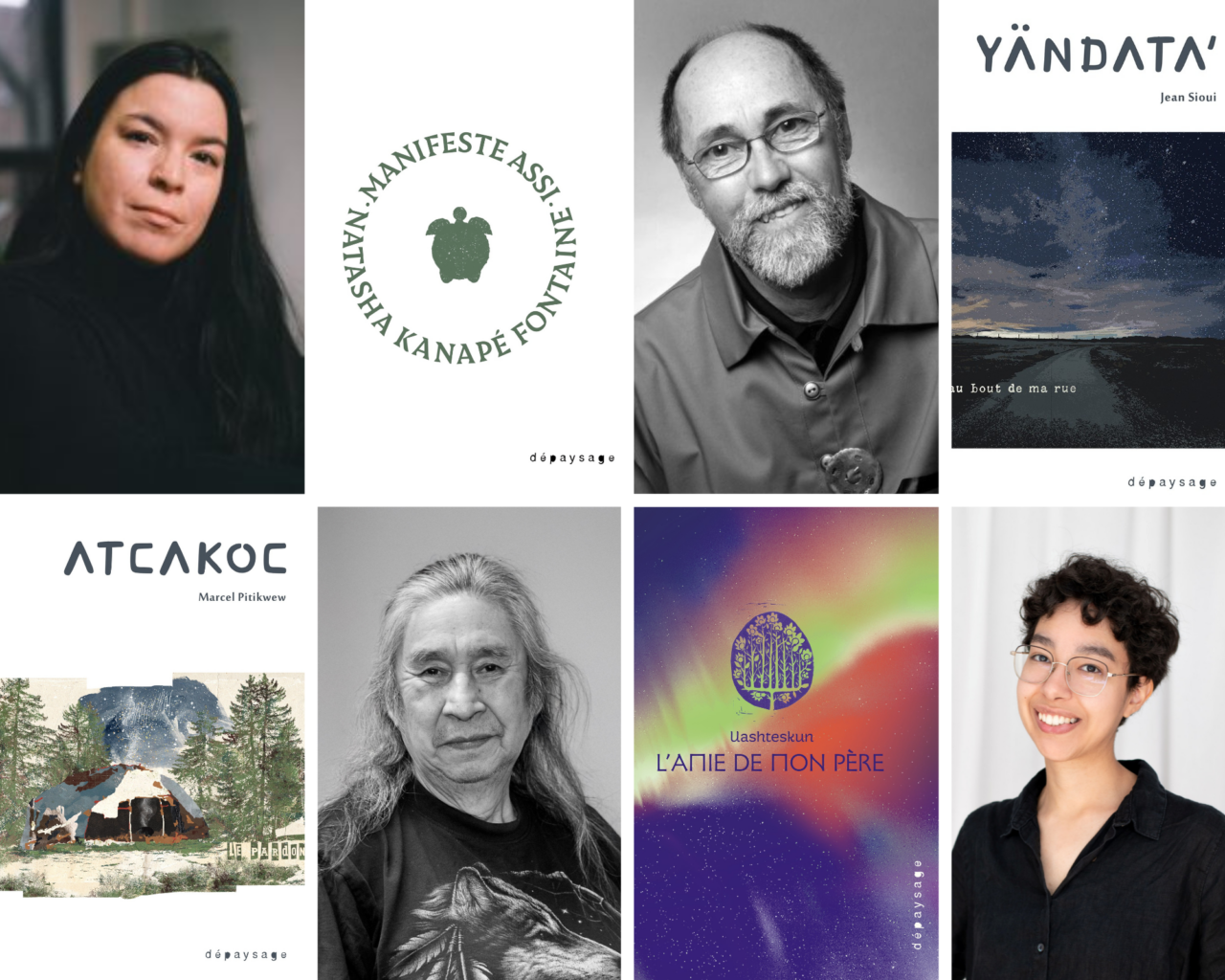
The Canadian cultural centre invites you to discover four leading Francophone indigenous literary voices from Canada, Innu poet and multidisciplinary artist Natasha Kanapé Fontaine, Atikamekw author Marcel Pititkwew, Wendat poet and novelist Jean Sioui, and Uashteskun, a Pekuakamiulnuatsh author.
Presented in collaboration with the publishers Prise de parole (Ontario), Hannenorak (Québec) et Dépaysage (France), this event also offers an opportunity to reflect on the contexts in which contemporary Indigenous literature is created and disseminated.
Natasha Kanapé Fontaine, Assi Manifesto
Assi Manifesto is a celebration of the Innu land in the tradition of Joséphine Bacon. This telluric power is reminiscent of Paul Chamberland’s Terre Québec. Natasha Kanapé’s challenge is to name her land, but also to reconcile opposites.
In this collection of poetry, the author engages with the environment, colonialism, anxiety, anger, healing, solitude, and love. “Assi” in Innu means Land. Assi Manifesto is primarily a land of women. If the manifesto is a public space, Assi is a forum of life, a song for those who open their spirit to its mystery.
Marcel Pititkwew – Atcakoc, le pardon
In this story at the crossroads of personal testimony, tale and spiritual journey, Marcel Pitikwew recounts the healing process of Tcikapec, a man ravaged by alcohol, the violence of residential school and shame. Guided by Atcakoc, a spirit child, he embarks on a path to recovery that involves ceremonies, remembrance, forgiveness and reconciliation with his people.
Written in a simple yet evocative language, this rare work gives direct voice to Indigenous spirituality and tells, without being didactic, how a shattered life can find its way back to love, truth and the passing down of traditions.
Jean Sioui Yändata’. L’éternité au bout de ma rue – éditions Dépaysage
I grew up with my memories. Happy memories. My indigenous father. My white other. Herbal tea grandma. My uncle into gin and the other into women. The priest and the witches who were two kind ladies. The family tree of Sioui, Gros-Louis, Picard, Vincent, Laveau, Lainé, Savard, Romain, Bastien. The Pauls growing old with made-up names that the world can pronounce.
Then, all those who just walked into our lives like that. The happy fantasy of bygone area. A past that shaped me. A world of traditions. A world I’ve been given and that I I’m passing on as a legacy.
Piece by piece, as if opening a box of memories, Jean Sioui rewords an intimate territory, Yändata’ made up of faces, gestures, legends and dramas, where tenderness never obscures lucidity. Somewhere between the burlesque and the tragic, he affirms a simple truth: we may be shaken and wounded, but with the help of our people, we learn to stay up.
Uashteskun L’Amie de mon père – éditions Dépaysage
2022. Maria, 14, is sure about one thing, her father hates her. Forced to spend the summer in Pimitshuan, she feels suffocated by his silence and his restrictions. And above all, there’s that one place he avoids at all costs, the very place she, of course, rushes to visit: the memorial. A white cross. Fifty-three names. And an inscription: “ In memory of the victims of the fire at Sainte-Anne’s church, on July 26, 1982…
A sensitive and accessible young adult novel that delicately explores parent-child relationships, the passing down of memories, and the formation of identity.
The conversation will be moderated by Marie Jouvin, journalist at Lire Magazine and will be followed by a book signing in collaboration with the Librairie du Québec à Paris.
Booking
Event fully booked.